Eyelashes Falling Out One Eye: What to Ask, Check, When to Refer


When a client reports eyelashes falling out on one eye, it is worth pausing before calling it “just the lash cycle”.
In many cases, the pattern points to local stress: friction, habits, curler technique, cleansing pressure, or product irritation affecting one side more than the other.
A Lash Artist’s role is not diagnosis, but structured assessment, red-flag awareness, and guiding clients towards lower-stress options safely.
What you will learn in this guide (3 key points)
How to tell true shedding from breakage or removal-related pulling
The most common one-eye triggers, plus counselling questions that quickly reveal patterns
When it may be okay to proceed with a service, when it is smarter to delay, and safer alternatives to daily curling
A client says: “My right lashes keep falling out. It happens when I clamp my curler or apply lash serum, but I’m not using much force.”
A lot of people will assume it is just a normal shedding phase. But when it is one eye only, it is worth pausing before giving a simple answer.
One-sided eyelash loss often points to local stress: friction, habits, inflammation, product irritation, or technique issues.
This guide breaks down how Lash Artists can assess what is going on, what to ask, what red flags to watch for, and how to steer clients towards lower-stress options.
Why “it’s just the lash cycle” is not always the best answer

Yes, lashes shed as part of the normal growth cycle.
But when a client reports:
Right eye only
Lashes “popping out” during specific contact actions (curler clamping, serum application)
No obvious pulling, yet the shedding feels sudden
…that pattern often suggests a local trigger, not a whole-system cycle.
As Lash Artists, the value is not diagnosing.
The value is having a structured assessment and giving safe, realistic guidance.
Step 1: Clarify what “falling out” actually means
Clients use “falling out” to describe different problems. Before guessing the cause, separate the possibilities.
1) True shedding from the root
The lash comes out fully. The client may notice a tiny bulb-like end.
This can still be normal, but a one-sided pattern often points to local factors like friction or inflammation.
2) Breakage (not true shedding)
The lash looks shorter or uneven. It snaps due to dryness, mechanical stress, or rough handling.
Breakage often increases with curlers, heavy waterproof mascara, aggressive cleansing, or rubbing.
3) “It fell out” but it was actually pulled during removal
Mascara, liner residue, or sticky product build-up can cause lashes to catch and come away with wiping.
This matters because “I’m not using force” can still mean the lashes are under repeated micro-stress.
Step 2: Why eyelashes can fall out on one eye only
Common local triggers to check (Checklist)
□ Sleep sideRight/left side sleeping can cause constant friction against the pillow.
□ RubbingAllergies, dry eye, or habitual rubbing (often more on one side).
□ Make-up removal pressureClients often wipe harder on the dominant-hand side.
□ Eye dropsFrequent wiping after drops can increase friction on one eye.
□ Using a curlerDaily clamping and angle differences can add repeated mechanical stress.
Step 3: Red flags that should shift the conversation
A Lash Artist should not attempt medical diagnosis, but you can recognise when the situation looks beyond routine care.
Recommend medical advice if the client has:
Redness, swelling, pain, or strong itch around the lash line
Crusting, flaking, or dandruff-like debris at the roots
Discharge, recurrent irritation, or constant dryness
Patchy gaps or sudden thinning that continues to worsen
Recent major hormonal change, illness, medication changes, or postpartum shedding (if they mention it)
✅️A professional line that keeps it calm and clear:
“This looks like it might involve irritation or inflammation, so it’s worth getting it checked before we do anything further.”
Step 4: Lash Artist counselling questions you can use immediately
You do not need a long interview. This quick template usually reveals the driver.
Observation and pattern
□ When did it start, and is it getting worse?
□ Is it always the right eye, or both at times?
□ Is it the same area each time (outer corner, centre, inner corner)?
Habits and friction
□ Which side do you sleep on most often?
□ Do you touch or rub one eye more due to dryness or allergies?
Curler and make-up
□ How often do you use a curler?
□ Do you use waterproof mascara regularly?
□ How do you remove eye make-up: cotton pad pressure or oil?
Lash serum reaction
□ Does the serum sting, itch, or make the lash line red?
□ Are you swiping lightly, or “scrubbing” along the base?
□ Are you following the directions for use, including the recommended amount and how often to apply it?
Even asking half of these questions will often pinpoint what is happening.
A Lash Artist perspective: Curlers vs Lash Lift or Extensions (overall damage risk)

Many people believes a curler is “gentle” because it is simple and non-chemical. In reality, a curler can create mechanical stress every day.
Daily clamping, plus wiping, mascara, and rubbing, can build up over time.
From a Lash Artist viewpoint, a well-executed Lash Lift or well-managed Lash Extensions can be lower-stress overall than daily curler use,
because:
They reduce daily mechanical clamping and repeated friction
They can lower reliance on heavy mascara and aggressive removal
They shift stress from daily habits to occasional, controlled salon procedures
Of course, this depends on correct timing, suitable product choice, and good aftercare. But when a client clamps lashes daily and is already losing lashes, guiding them towards a professional service can be a safer long-term option.
Support plan (home care)

If your client’s lashes seem stressed, focus on reducing daily mechanical pressure first. For home care, a gentle routine can help.
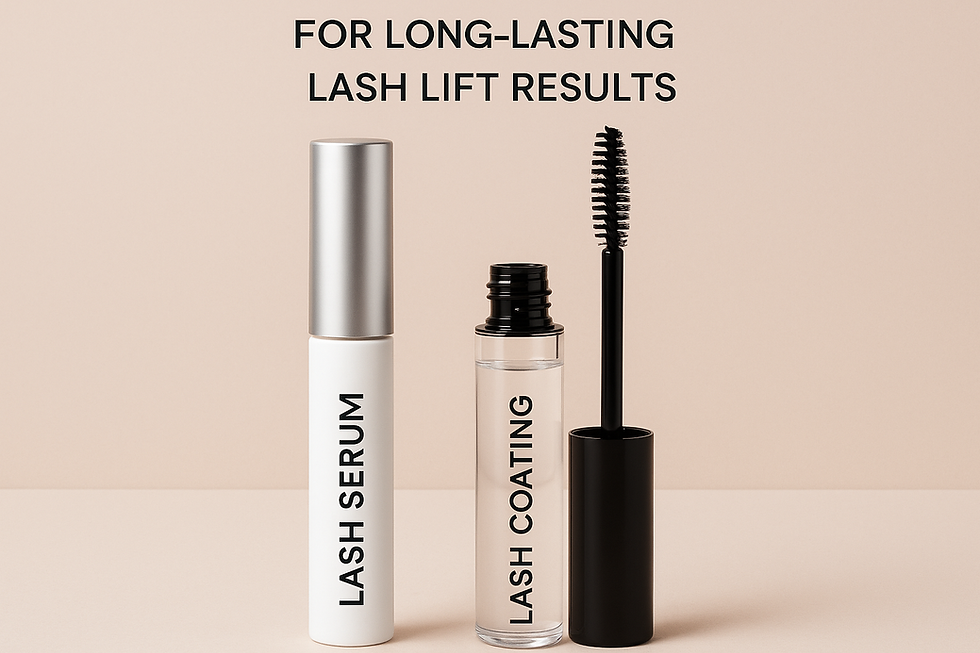
・For styling and protecting existing lashes, Style & Coat Lash Coating Gel supports a neater finish while helping minimise friction.
・For long-term lash support, ADVANCED.byK Lash Serum is designed to support the lash condition with consistent daily use.
Can you proceed with a Lash Lift or Extensions?

This is where your consultation process becomes genuinely valuable.
⭕️When it may be okay to proceed | ❌️When it is smarter to delay |
No redness or significant discomfort | Obvious irritation, crusting, swelling, or a painful lash line |
No patchy gaps that look progressive | Sudden worsening or patchy loss in a clear area |
Shedding seems linked to habits (curlers, rubbing, cleansing) rather than active irritation | The client cannot stop rubbing, or reactions are ongoing |
Client understands aftercare and will reduce mechanical stress |
Based on the assessment, you can explain the client’s current situation like this.
✅️Quick phrases you can use right away:
“When it’s mainly one eye, it’s often linked to friction or habits, not just the lash cycle.”
“Let’s check how you remove your eye make-up and whether you’re touching that side more.”
“If you’re clamping your lashes with a curler every day, simply reducing that mechanical stress can make a big difference.”
“If we choose the right option for your lash condition, a lash lift or extensions can be gentler overall than daily curling.”
“If there’s redness or irritation along the lash line, it’s safest to have it checked by a medical professional before we proceed with any service.”
Summary: Turn a common question into a pro-level education moment

For Lash Artists, there is rarely one perfect answer.
What matters is the framework:
One eye often points to local stress
Separate true shedding vs breakage
Ask habit-based questions that reveal friction
Know red flags and when to refer
Offer lower-stress alternatives to curlers, including Lift or Extensions, when appropriate
This approach positions you as a professional Lash Artist, not just a service provider.
Quick FAQ (for search intent)
Why are my lashes falling out on one eye only?
One-sided lash shedding is often linked to local factors like sleep friction, rubbing, make-up removal pressure, contact lens handling, or a curler angle that puts more stress on one side.
Can an eyelash curler cause lash breakage or shedding?
Yes. Daily clamping can create repeated mechanical stress, especially when combined with waterproof mascara and strong removal. Even “light pressure” done repeatedly can add up.
Should a client stop using lash serum if it stings?
If a serum stings, causes redness, or triggers ongoing irritation, stopping and reassessing is the safest move. Irritation is not a normal expectation, and persistent symptoms should be checked.


Comments